
Frozen shipping is often treated as a single category, but that oversimplification can create real cold chain risk. A product that must remain at or below -20°C does not have the same packaging requirements as one that must remain at or below -60°C or -70°C. A frozen vaccine, biologic material, clinical sample, or deep-frozen payload may require very different insulation, refrigerant, payload spacing, hold-time expectations, and qualification logic depending on its exact temperature profile.
For organizations shipping frozen healthcare and life science products, the first step is not asking whether a product is frozen. The better question is: frozen to what threshold, for how long, across what lane, and under what handling conditions?
Nordic Cold Chain Solutions’ design-tested frozen parcel shippers address this distinction by supporting multiple frozen performance profiles across one- and two-day shipments. Available in EPS and sustainable cotton insulation formats, these systems are designed and tested to meet ISTA 7E requirements and accommodate a range of payload sizes and duration needs.
Why “Frozen” Is Too Broad for Serious Cold Chain Planning

In everyday language, frozen may sound precise. In cold chain logistics, it is not. A product held below -20°C occupies a very different thermal category than a payload requiring -70°C protection. The packaging strategy that supports one may be insufficient, inefficient, or inappropriate for the other.
This matters because vaccines, biologics, lab materials, and other temperature-sensitive payloads may have strict stability requirements. The consequences of choosing the wrong frozen shipping profile can include compromised product quality, failed shipments, expensive replacement costs, delayed administration, and documentation gaps.
Frozen packaging decisions should account for:
- Required temperature threshold
- Product sensitivity and stability profile
- Payload size and density
- Shipment duration
- Refrigerant type and quantity
- Insulation material
- Seasonal exposure
- Carrier lane and handoff conditions
- Testing standards and qualification needs
The goal is not simply to make a package cold. The goal is to maintain the defined temperature condition long enough to protect the product through realistic transit conditions.
The Difference Between -20°C, -60°C, and -70°C Shipping

The thermal demands of frozen shipping intensify as the required temperature threshold drops. A -20°C shipment may be appropriate for certain frozen vaccines, biologics, or materials that need to remain frozen but do not require ultra-low temperature conditions. Shipments at or below -60°C or -70°C typically demand a more aggressive thermal strategy, often involving deeper frozen performance expectations and more carefully controlled packaging designs.
The difference is not merely numeric. Lower-temperature payloads require packaging systems that can resist heat intrusion more effectively and sustain deeper thermal conditions across the shipment window.
Temperature thresholds may influence:
- Shipper size and insulation profile
- Refrigerant selection and quantity
- Corepack space available for payload
- Hold-time expectations
- Required testing or qualification approach
- Whether additional monitoring should be used
- The level of risk created by transit delays
This is why tested duration matters. Nordic’s frozen shipper data reflects different performance durations at different temperature thresholds. The same general shipper style may perform for a longer duration at -20°C than at -70°C, which reinforces the importance of selecting packaging based on the actual temperature requirement rather than a generic frozen label.
Packaging Strategy Starts With the Payload
Before selecting a frozen shipper, teams need to define the payload characteristics. A small vial pack, a diagnostic kit, a larger biologic payload, and a multi-component vaccine shipment may each interact differently with the packaging system.
Payload considerations include:
- Available corepack space
- Total product mass
- Primary packaging format
- Sensitivity to temperature fluctuation
- Need for separation from refrigerant
- Required orientation or cushioning
- Whether the shipment includes mixed components
- Whether the shipment needs one-day or two-day performance
Small frozen payloads may be easier to fit but can be more vulnerable to temperature changes if the packaging is not properly configured. Larger payloads may introduce different thermal behaviors and space constraints. The shipper must provide enough protection without crowding the payload or creating assembly complexity.
Nordic’s frozen parcel shippers are available in multiple sizes, allowing organizations to match shipper selection to the payload area and desired frozen performance window. This is especially useful for programs that ship a range of frozen products and need packaging flexibility without abandoning tested performance.
EPS and Cotton Frozen Shippers: Performance and Sustainability Considerations
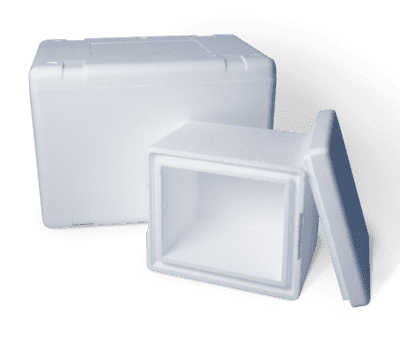
Frozen shipping decisions increasingly include sustainability alongside performance. EPS has long been used in cold chain packaging because of its insulation properties and familiarity across pharmaceutical and healthcare distribution. Cotton-based insulation provides another option for organizations seeking more sustainable packaging formats while maintaining tested frozen performance.
The right choice depends on product needs, customer priorities, cost considerations, disposal expectations, and operational fit.
Teams evaluating insulation formats should consider:
- Required frozen temperature threshold
- Duration expectations
- Sustainability goals
- Disposal or recycling preferences
- Payload dimensions
- Operational familiarity with the material
- Cost and freight implications
- Whether the solution has been design-tested for the intended use case
The key is to avoid treating sustainability and performance as separate conversations. For frozen healthcare shipping, environmental improvements only matter if the packaging still protects the product. Nordic’s availability of both EPS and cotton frozen shipper configurations allows organizations to consider both thermal requirements and material preferences within a tested packaging framework.
ISTA 7E Testing and the Value of Evidence-Based Packaging
Frozen shipments are too sensitive for assumptions. Packaging should be evaluated against real-world environmental conditions, particularly when products are high-value, regulated, or clinically important. ISTA 7E testing provides a structured way to assess thermal transport packaging performance against external temperature profiles.
For vaccines, biologics, and deep-frozen payloads, design-tested packaging helps organizations make better decisions before shipments enter the field. It also strengthens confidence when shipping through parcel networks where conditions can vary significantly.
Evidence-based packaging supports:
- More accurate shipper selection
- Better risk management across lanes
- Improved documentation for quality teams
- Reduced reliance on overbuilt or improvised solutions
- Clearer expectations for shipment duration
- Greater confidence before products move through parcel networks
This is especially important for one- and two-day frozen parcel shipments. A package that appears visually sufficient may not hold the required temperature under stress. Tested performance data gives teams a more defensible basis for choosing a frozen packaging configuration.
Matching Frozen Packaging to Real Transit Conditions
A frozen shipper’s duration rating is only part of the decision. Teams also need to consider how the package will move. A one-day shipment in a stable lane may require a different approach than a two-day shipment with known carrier variability. A shipment moving through summer conditions may need a more conservative configuration than one moving through moderate ambient exposure. A high-value biologic may justify added monitoring or a more robust packaging profile.
Important lane variables include:
- Transit time
- Carrier cutoff schedule
- Weekend or holiday risk
- Seasonal temperature exposure
- Regional climate differences
- Distance between origin and destination
- Potential delays at hubs or final delivery
- Receiving readiness at the destination
Frozen packaging should be selected based on the combined effect of product requirement and lane reality. A shipment that arrives on time but warms outside specification is still a failed cold chain event. Conversely, a shipper that is unnecessarily oversized can increase material use, cost, and operational burden. The best packaging strategy aligns product protection with actual distribution conditions.
A More Precise Approach to Frozen Cold Chain Protection
Frozen is not one temperature, and treating it that way can lead to mismatched packaging decisions. Vaccines, biologics, diagnostic materials, and deep-frozen payloads require packaging strategies based on defined thresholds, tested duration, payload characteristics, and lane risk.
Nordic Cold Chain Solutions helps organizations address that complexity with design-tested frozen parcel shippers available in EPS and cotton insulation formats, multiple shipper sizes, tested frozen performance profiles, and in-house cold chain testing expertise.