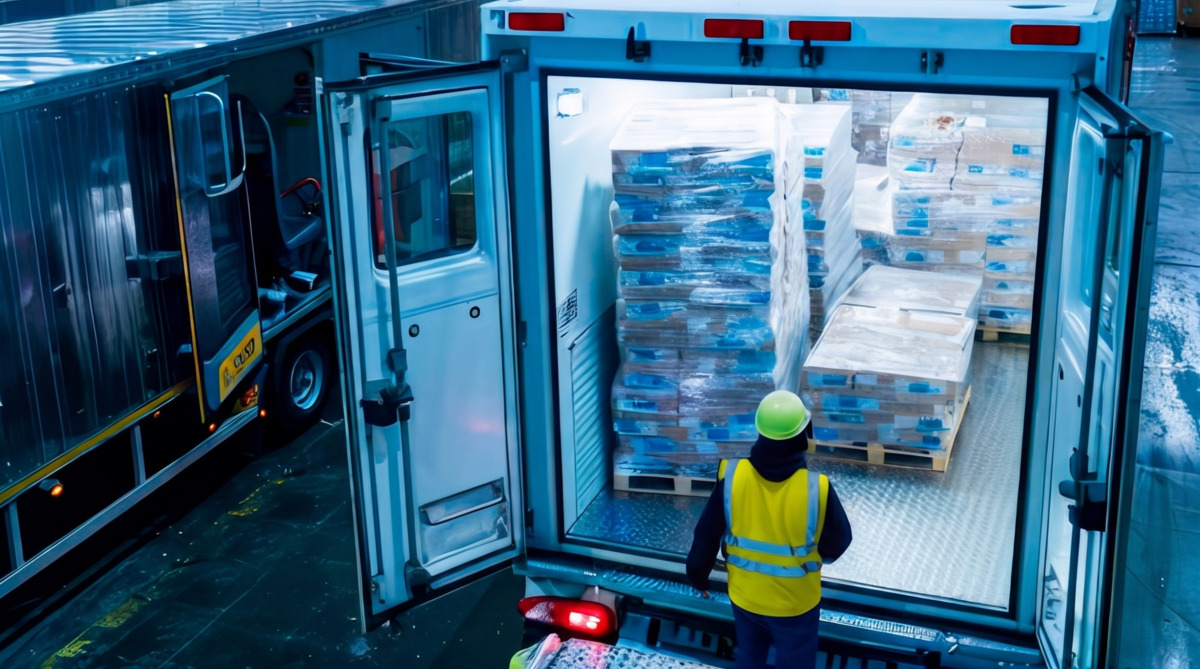
Long-term care pharmacy cold chain is fundamentally different from traditional parcel shipping. These operations do not usually send one insulated package from origin to one endpoint and call the job done. Instead, they move refrigerated medications across scheduled multi-stop routes that may span a full workday, serve numerous facilities, and require repeated handling throughout the route. In that environment, the route itself becomes the cold chain. Packaging has to perform not only in a closed box, but across an operational pattern shaped by door openings, handoffs, stop density, and variable receiving practices.
That route-based model matters because long-term care pharmacies support a broad network of nursing homes, assisted living settings, and other congregate care environments, and they do so under a distinct service structure that differs from retail or mail-order pharmacy. Industry and policy sources describe LTC pharmacy as a specialized sector serving long-term care populations with recurring delivery obligations, medication-management support, and facility-oriented workflows. At the same time, CMS guidance makes clear that medication labeling, storage, and handling remain central expectations in nursing home operations, which raises the importance of delivery practices that support those standards from the pharmacy to the receiving site.
As refrigerated therapies become more common in chronic care and specialty treatment, route stability matters even more. GLP-1 therapies have grown rapidly in recent years, including among older adults as obesity and metabolic management receive more clinical attention, increasing the likelihood that LTC medication programs will need to move more temperature-sensitive products through already demanding route models. For pharmacies serving nursing homes and assisted living communities, the challenge is no longer simply getting refrigerated product out the door. It is maintaining dependable 2 to 8°C performance across repeatable, multi-stop delivery conditions without creating unnecessary complexity for pack-out teams or drivers.
Why LTC route delivery creates a different cold chain challenge

Most long-term care pharmacy cold chain programs center on refrigerated medications moving within a 2 to 8°C range. The complexity comes from the route itself. A delivery vehicle may carry medications for 10, 20, or 30 stops, with the driver opening totes or handling packages repeatedly through an 8- to 12-hour day. Unlike a single-destination shipment, route-based cold chain has to remain stable through ongoing motion, repeated access, and different delivery environments from one facility to the next. Nordic’s route-oriented approach is built around this reality rather than around a standard parcel assumption.
Several route factors shape thermal risk in LTC delivery:
- Stop count and route duration: More stops usually mean more handling opportunities and longer exposure time.
- Small-batch drops: Many facilities may receive only a few pens, vials, or other refrigerated items, which makes right-sizing more important.
- Driver execution: Deliveries are often completed by route personnel, so packaging has to be intuitive and repeatable.
- Receiving variability: Some facilities can refrigerate product immediately; others may have slower handoff and intake patterns.
- Seasonality: Summer heat, winter cold, and shoulder-season swings can all affect route performance.
Because of these factors, route packaging should be chosen for actual route behavior rather than generic transit assumptions. A box that performs well for a single overnight shipment may not be the right answer for a multi-stop LTC route with repeated handling. This is why cold chain planning in long-term care is as much an operational design exercise as a packaging decision.
Right-sized cold chain matters when drops are small

Many LTC pharmacies are not delivering large refrigerated payloads to each site. A stop may involve only one to five insulin pens, a few GLP-1 units, or a limited number of specialty injectables. Yet those small drops still need the same temperature discipline as larger shipments. This creates a familiar route-delivery tension: the packaging has to protect the medication, but it also has to remain practical for recurring daily use.
Oversized packaging can create unnecessary material consumption, excess refrigerant use, more difficult handling, and a less efficient fit within route totes or vehicle organization. Right-sized packaging helps resolve that tension by matching the thermal solution to the quantity actually being delivered. For LTC pharmacies, that can improve route efficiency while still supporting product protection.
This is one reason Nordic emphasizes compact, route-appropriate configurations for LTC operations. In a thin-margin delivery model, performance has to work alongside practicality. A package that is thermally strong but cumbersome to handle every day may create its own operational problems. The better approach is a configuration that balances protection, repeatability, and day-to-day usability.
Compliance does not stop at the pharmacy door
Long-term care delivery also sits inside a broader framework of medication storage and handling expectations. CMS survey guidance includes F761 on labeling and storage of drugs and biologicals, and USP chapters such as <1079> address risks and mitigation strategies for the storage and transportation of finished drug products. USP materials also note that sterile compounding standards under <797> pertain to preparation, storage, and transportation. For LTC pharmacies, that means the delivery process should support clear procedures, consistent execution, and practical documentation across routes and receiving environments.
This does not mean every route needs an elaborate compliance overlay. It means packaging and pack-out methods should be structured enough to support internal consistency. If routes are recurring, staff are changing, and facility delivery conditions vary, then repeatable pack-out logic becomes part of risk control. Standardization helps pharmacies demonstrate that the cold chain process is not improvised from one route to the next.
What strong LTC cold chain packaging should support
For LTC route delivery, the best packaging systems do more than hold temperature in isolation. They support the real way the program runs.
A strong LTC cold chain approach should help pharmacies achieve:
- Route-stable 2–8°C protection across multi-stop delivery patterns
- Compact packaging for small facility drops without unnecessary overpacking
- Standardized pack-outs that reduce staff-to-staff variation
- Driver-friendly handling that fits recurring delivery execution
- Compatibility with tote-based operations where those workflows already exist
- Scalability as routes, stop counts, and refrigerated medication volume grow
This is where Nordic’s role becomes especially relevant. Rather than forcing LTC pharmacies into a one-size-fits-all model, Nordic helps align insulated packaging configurations to route duration, stop density, seasonal exposure, and operational routine. That may mean smaller-format refrigerated packaging for local routes, more standardized formats for regional lanes, or configurations with added thermal buffer where route length and variability increase risk.
Why standardization becomes more valuable as routes grow

As LTC route programs become more complex, inconsistency often becomes a bigger problem than material failure. The shipper may be sound, but outcomes can still vary if one technician packs differently than another, if substitute components are introduced, or if route-day execution changes from driver to driver.
That is why standardized shipper formats, defined component sets, and repeatable pack-out methods matter so much in multi-stop pharmacy delivery. They reduce the chance that thermal performance will depend on who assembled the package that day. They also make training easier and route operations more predictable.
For pharmacies already using tote-based workflows, packaging should work with the system rather than against it. Nordic can help shape cold chain packaging around existing operational models so refrigerated medications remain easier to organize, deliver, and hand off. When route count, delivery geography, or refrigerated product mix changes over time, that structure also makes future optimization easier.
Building a stronger route-based cold chain with the right partner
LTC pharmacy delivery is not a simplified version of parcel shipping. It is a distinct refrigerated distribution model with its own operational pressures, compliance considerations, and route-level risks. The strongest programs recognize that multi-stop cold chain performance depends on more than insulation alone. It depends on route-aware packaging, right-sized formats, repeatable handling, and a system designed around how long-term care delivery actually works.
Nordic Cold Chain Solutions supports LTC pharmacies with insulated packaging strategies built for recurring route delivery, small-batch facility drops, and practical operational consistency. From route-stable 2 to 8°C configurations to support for pack-out standardization across teams and delivery days, Nordic helps pharmacies create a more dependable refrigerated distribution model without adding unnecessary friction to daily operations.
To strengthen your LTC pharmacy cold chain and build a route-delivery approach aligned with your stop count, seasonal conditions, and operational workflow, reach out to Nordic Cold Chain Solutions. Our team can help you evaluate packaging options, standardize pack-outs, and improve route stability across your long-term care delivery network.