
September can create a false sense of security for organizations shipping temperature-sensitive peptide therapies. The most intense summer heat may be fading, but stable autumn conditions have not yet arrived. Distribution networks can still encounter hot afternoons, cooler overnight temperatures, regional storms, and significant climate differences between origin and destination.
For compounding pharmacies, specialty pharmacies, wellness clinics, and other organizations supporting peptide distribution, this transitional period deserves deliberate cold chain planning. A package prepared in a temperature-controlled pharmacy may travel through a warm sorting facility, sit inside a delivery vehicle during the afternoon, and reach a patient’s doorstep after outdoor conditions have changed considerably.
The calendar may say fall is approaching. The parcel network, however, may still behave like summer.
Peptide programs need packaging strategies that account for this uncertainty while remaining practical enough for recurring fulfillment. The goal is not simply to add more refrigerant. It is to create a repeatable packaging configuration that can maintain the required range without exposing the payload to unnecessary thermal stress.
Why Early-Fall Variability Matters for Peptide Therapies
Many peptide therapies are distributed under refrigerated conditions, commonly between 2°C and 8°C, although the correct range depends on the compound, formulation, and manufacturer or pharmacy instructions. Semaglutide, tirzepatide, BPC-157, and CJC-1295/ipamorelin are frequently associated with refrigerated handling. Other compounds may have different requirements before and after reconstitution.

That variation makes product-specific planning essential. Packaging decisions should begin with documented stability requirements rather than a generalized assumption that all peptide shipments can follow the same process.
September adds complexity because ambient conditions can change significantly during a single shipping cycle. A package may leave during a cool morning, encounter high temperatures at a regional hub, and remain outdoors during a delayed residential delivery. Another shipment traveling a similar distance may experience entirely different weather.
The most important variables often include:
- The documented shipping range for the specific compound and formulation
- Expected transit duration, including possible weekend delays
- The number of carrier handoffs along the route
- Exposure inside vehicles, hubs, parcel lockers, or residential drop-off areas
- Payload size and the amount of thermal mass inside the package
- Refrigerant conditioning and placement
- The consistency of the pack-out process across employees and locations
These factors frequently influence performance more than mileage alone.
Small Payloads Can Respond Quickly to External Conditions
Peptide shipments are often compact. A small vial, injection kit, or limited supply may require little payload space, but that does not make temperature protection simple. Small payloads can be especially responsive to the thermal environment around them because they have less product mass available to resist change.
This means an oversized quantity of deeply frozen refrigerant is not automatically safer. An aggressive configuration may create cold-side risk near the payload, while an underpowered configuration may lose capacity before the final delivery. Successful performance depends on balancing insulation, refrigerant quantity, refrigerant temperature, placement, and duration.
A well-defined pack-out should establish:
- Which refrigerant size is used
- How each unit is conditioned
- Where the refrigerants are positioned
- Whether a barrier separates the payload from direct contact
- How the payload is oriented inside the shipper
- How long completed packages may remain staged before carrier pickup
- What employees should do when a shipment misses its planned departure
Clear instructions turn packaging from an individual judgment call into an operational standard.
Nordic Ice® Regular Gel Packs Support Flexible Pack-Out Design
Nordic Ice® Regular Gel Packs provide a practical refrigerant option for refrigerated peptide shipments requiring consistent cooling performance. Available in multiple sizes, the gel packs can be incorporated into configurations based on payload dimensions, shipper geometry, transit expectations, and thermal testing.
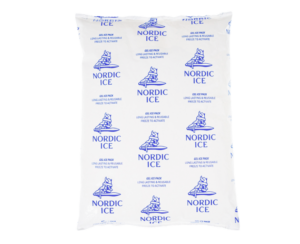
The size range allows packaging teams to build around the shipment rather than forcing every order into the same refrigerant arrangement. Smaller packs may be appropriate when payload space is limited or precise placement is necessary. Larger formats can provide additional thermal mass where the validated configuration calls for it.
Nordic Ice® Regular Gel Packs are manufactured with durable exteriors intended to withstand routine shipping and handling. Their reusable construction can also support internal operations where refrigerants are recovered and managed through a controlled reuse program.
For peptide programs, the most important benefit is not the presence of a gel pack by itself. It is the ability to use a dependable cold chain component within a documented, repeatable system.
Conditioning Procedures Require as Much Attention as Pack Placement
Two shipments can use identical materials and still perform differently when refrigerants are not prepared consistently. Conditioning affects the thermal behavior of the entire package. Gel packs pulled from different freezer zones, allowed to temper for different periods, or staged under varying room conditions may not enter the shipper in the same state.
That inconsistency can become more pronounced during busy fulfillment periods. Employees may pull refrigerants as needed rather than according to a defined schedule. Freezer loading practices may restrict airflow. Packs may be stacked differently from one shift to another. A process that appears straightforward can gradually produce meaningful variation.
A stronger refrigerant management program should address:
- Freezer temperature and operating parameters
- Minimum conditioning time
- Approved placement and stacking inside the freezer
- Tempering requirements, when applicable
- Maximum time refrigerants may remain at room temperature before use
- Lot or inventory rotation practices
- Procedures for damaged, leaking, or questionable units
These controls help ensure the component entering the package matches the assumptions behind the pack-out.
September Is an Ideal Time to Review Shipping Lanes
The transitional weeks before colder weather provide a valuable opportunity to examine real-world shipping data. Organizations can review which lanes experienced delays during summer, where deliveries remained outdoors longest, and whether certain packaging formats created unnecessary labor or material use.
Questions worth asking include:

- Are 24-hour shipments routinely arriving within the assumed window?
- Which destinations show the greatest carrier variability?
- Are completed packages waiting too long before pickup?
- Do technicians interpret the pack-out instructions consistently?
- Are current configurations appropriate for both warm and moderate conditions?
- Is monitoring data available to verify actual performance?
- Will the same process remain manageable as weekly order volume increases?
The objective is not to redesign every package for each daily weather forecast. It is to establish a defensible range of approved configurations for the lanes and conditions the program routinely encounters.
Standardization Becomes More Important as Volume Grows
Early-stage peptide programs may begin with only a handful of weekly shipments. In that setting, an experienced employee can closely supervise each order. As volume increases, that model becomes difficult to sustain. More employees may participate in fulfillment, multiple locations may prepare orders, and carrier cutoffs may place pressure on assembly speed.
This is when informal knowledge must become documented process.
Standardized component sets can help reduce variation by ensuring employees use the correct shipper, refrigerants, barriers, and supporting materials for each shipment category. Predefined kits can also simplify inventory planning and make training more efficient.
Rather than asking technicians to determine the right pack-out from scratch, the organization can provide a clearly identified configuration based on payload type, lane duration, or shipping tier.
Build a Packaging Foundation That Can Adapt Without Becoming Inconsistent
September weather highlights an important distinction in peptide cold chain management: adaptability does not have to mean improvisation. A mature program can account for changing conditions through approved alternatives while still preserving process control.
Nordic Cold Chain Solutions helps organizations evaluate peptide packaging according to the product range, shipment duration, payload size, workflow, and operational scale. Nordic Ice® Regular Gel Packs can be incorporated into insulated packaging configurations built around repeatable refrigerated performance.
For compounding pharmacies and specialty distribution programs, this approach supports more than thermal protection. It helps create a packaging foundation that employees can execute consistently as volumes, routes, and seasonal conditions evolve.
Do not allow moderate forecasts to create relaxed shipping assumptions. Use September as an operational checkpoint to evaluate refrigerant conditioning, pack-out instructions, lane performance, and fulfillment consistency before the next seasonal shift.