November creates an unusual cold chain environment for long-term care pharmacies. Summer heat has largely receded across much of the country, but lower ambient temperatures do not eliminate thermal risk. Instead, holiday schedules, shifting weather patterns, longer receiving delays, increased traffic, shortened staffing windows, and route changes can make refrigerated medication delivery less predictable.
For long-term care pharmacies serving nursing homes and assisted living facilities, those disruptions affect a delivery model already built around repeated handling.
A single vehicle may service numerous facilities across an 8- to 12-hour route. Drivers may manage refrigerated products alongside standard medication totes. Individual facilities may receive only a few insulin pens, GLP-1 medications, injectables, or other products requiring 2–8°C control.
During Thanksgiving week and the broader November transition into winter, pharmacies need packaging strategies that account for route variability rather than assuming cooler outside temperatures automatically provide added protection.
Nordic Cold Chain Solutions works with LTC operations to develop route-aware refrigerated packaging using right-sized shippers, appropriate refrigerants, documented pack-outs, and more robust insulated formats where duration or exposure warrants additional thermal protection.
November Replaces Heat Stress With Variability
Cold chain programs frequently focus on high summer temperatures because the connection between heat and refrigeration risk is obvious.
November conditions can be more deceptive.
Temperatures may vary significantly between morning departure and afternoon delivery. A route could begin near freezing and later encounter mild conditions. Vehicles may be heated for driver comfort, creating an environment very different from the outdoor temperature. Medications may transition between pharmacies, vans, loading areas, vestibules, reception desks, and heated care facilities.
That means the package needs to control the product environment rather than depend on ambient weather to remain cold.
For 2–8°C medications, excessively cold exposure can be just as important to consider as high-temperature exposure. Refrigerated products are not automatically intended to freeze.
A cold-weather strategy therefore needs to balance the entire thermal profile.
Thanksgiving Can Change Normal Route Assumptions
Long-term care pharmacies rely heavily on recurring patterns.
Drivers often know their facility sequence. Pharmacy teams know typical order volumes. Receiving personnel know when deliveries arrive. Packaging procedures can be built around those recurring rhythms.
Holiday weeks disrupt them.
Facilities may operate with reduced administrative staff. Receiving teams may have adjusted schedules. Pharmacy delivery runs may be consolidated or shifted. Traffic surrounding the Thanksgiving holiday may increase route duration. A delivery that normally reaches a facility at 10:00 a.m. could arrive substantially later.
These changes make November an appropriate time to review the assumptions behind current refrigerated packaging.
If a pack-out is configured around an eight-hour delivery window, what happens when the route becomes ten or twelve hours? If a facility typically transfers medications to refrigeration immediately, what happens when holiday staffing creates a delay?
The packaging program needs enough margin to reflect those realistic deviations.
Longer Routes May Require a Different Insulation Strategy
Small-format packaging remains important in LTC delivery because individual facility drops may contain only a limited number of refrigerated medications. There is little operational value in placing several pens or vials into an unnecessarily large shipper.
However, some November routes may justify additional insulation.
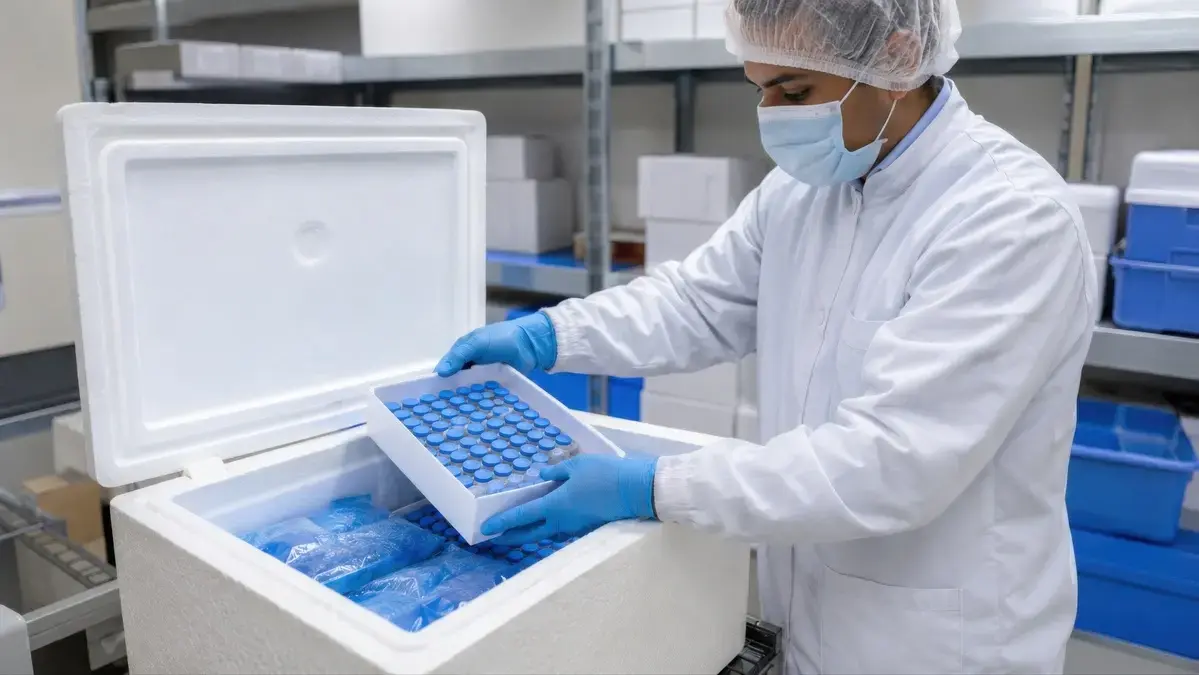
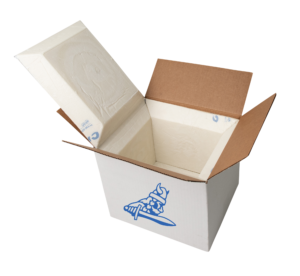
Polyurethane cooler boxes provide enhanced insulation properties for shipments requiring longer temperature-control duration. Nordic’s polyurethane shippers combine an expanded polyurethane thermal enclosure with a protective corrugated exterior, creating a two-part package intended for longer travel and demanding distribution conditions.
Available standard sizes range from approximately 10 x 8 x 8 inches through 20 x 20 x 20 inches, with custom sizing available for application-specific requirements.
For LTC operations, polyurethane packaging may be appropriate for specific high-risk applications rather than every facility drop. Longer regional transfers, extended holiday routes, medication replenishment between pharmacy locations, or larger consolidated refrigerated loads may justify the added thermal buffer.
The objective is to match the insulation system to route risk instead of standardizing every delivery around the most extreme scenario.
Route Segmentation Becomes Especially Valuable in November
A pharmacy serving dozens of facilities may have several very different route types.
One driver may cover a dense local territory where stops are only minutes apart. Another may travel more than 100 miles across rural facilities. Some routes may conclude before noon, while others continue late into the day.
Assigning the same cold chain configuration to all of them can be inefficient.
A better strategy is to classify routes according to duration and handling complexity.
Short local runs may continue to use compact refrigerated formats. Longer routes can be assigned configurations with greater insulation or refrigerant capacity. Holiday-adjusted routes may temporarily move into a higher protection tier when pharmacy teams expect extended drive time or receiving uncertainty.
This approach allows packaging resources to be directed toward the deliveries with the greatest exposure potential.
It also gives staff a simpler decision structure. Rather than evaluating each order from the beginning, technicians can select a predefined pack-out based on the assigned route category.
Refrigerant Selection Still Matters in Cold Weather
Colder outdoor temperatures do not eliminate the need for controlled refrigerants.
Nordic Ice® Regular Gel Packs provide reusable polymer-based cooling for pharmaceutical and other temperature-sensitive applications. They are manufactured in multiple sizes, allowing refrigerant quantity to be aligned with the payload and package.
What matters is how those refrigerants interact with the rest of the system.
A gel pack placed directly against a sensitive pharmaceutical product may create a different temperature profile than the same pack separated by cushioning, insulation, or payload geometry. Conditioning also influences performance.
These relationships are why pack-outs should be defined rather than improvised based on outdoor temperature.
Pharmacy personnel should not have to decide on a cold November morning that fewer refrigerants “seem sufficient.” Any seasonal modification should be based on evaluated packaging performance and documented procedure.
Tote Workflows Need a Holiday Review Too
Many LTC pharmacies integrate refrigerated medications into reusable tote systems.
This improves route organization, but Thanksgiving-week schedule changes can alter how those totes are staged and handled. Consolidated deliveries may mean more medication in each vehicle. Routes may depart at different times. Facility-specific items may remain inside the system longer than normal.
Refrigerated components should remain easy for drivers to identify and access without unnecessary searching or exposure.
A November workflow review can examine:
- Whether route changes increase time before the final refrigerated drop
- Whether refrigerated orders remain clearly separated within totes
- Whether additional holiday volume changes vehicle organization
- Whether facility receiving hours have been confirmed
- Whether pack-outs are being staged longer before departure
- Whether higher-risk routes require added monitoring
- Whether drivers have clear procedures for unexpected receiving delays
These are operational questions, but each can influence thermal performance.
GLP-1 Volume Raises the Stakes
Growth in GLP-1 use adds another reason for LTC pharmacies to scrutinize holiday cold chain operations.
As semaglutide, tirzepatide, and other refrigerated therapies become a larger part of medication distribution, more individual facility stops may contain temperature-sensitive products. A route that once included only occasional refrigerated medication may now carry cold chain items for numerous facilities.
This changes both scale and frequency.
When refrigeration becomes part of everyday route execution, informal procedures become less sustainable. Pharmacies need predictable pack-outs, defined route tiers, and packaging components that can be replenished and assembled consistently.
The holiday period often reveals whether those systems are mature enough to handle disruption.
Building More Resilient November Routes
November cold chain planning should focus on resilience rather than simply adding insulation.
LTC pharmacies should understand which routes are most vulnerable to holiday delays, which facilities have inconsistent receiving windows, and which medications require the tightest handling control. Packaging can then be aligned with the actual operating conditions.
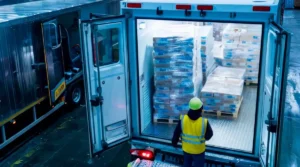
For some routes, the existing compact refrigerated pack-out may remain appropriate. Others may benefit from additional refrigerant, a different insulated configuration, or polyurethane packaging with greater thermal resistance.
The strongest solution is the one that protects medications without making everyday route execution unnecessarily complicated.
Nordic Cold Chain Solutions helps LTC pharmacies evaluate route length, payload size, delivery cadence, seasonal conditions, and pack-out requirements to develop packaging systems that can be repeated across busy pharmacy operations.
This November, preparing for colder temperatures is only part of the equation. The larger challenge is preparing for schedules that become less predictable precisely when medication continuity still needs to remain dependable.