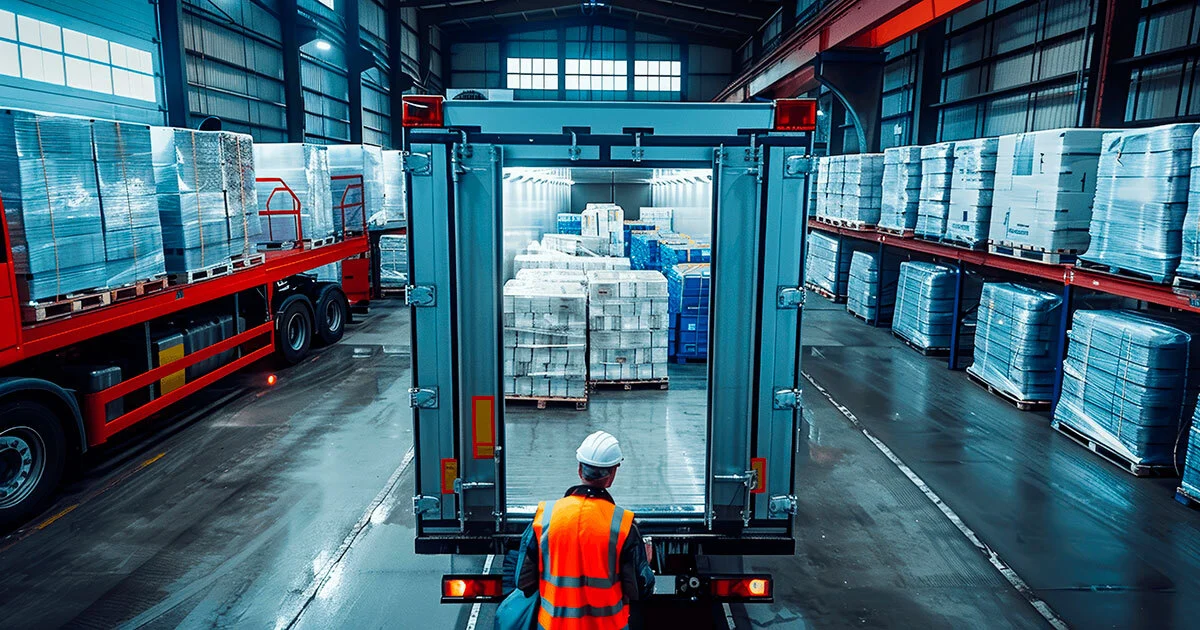
Long-term care pharmacy delivery is often discussed as though it were a refrigerated version of standard parcel shipping. In practice, it operates under a very different logic. These pharmacies do not typically prepare one insulated package and send it directly to one destination. They serve recurring facility networks across scheduled delivery routes, often moving refrigerated medications through dozens of stops in a single day. In that environment, the success of the shipment depends less on how a box performs in isolation and more on how the cold chain holds together across the full route.
This operating model changes the role packaging has to play. A long-term care pharmacy may be servicing nursing homes, assisted living residences, and other care settings across delivery patterns that extend far beyond a simple local drop. Refrigerated product can move through hours of repeated access, route staging, tote transfers, and facility-by-facility handoff before the final stop is complete. In that setting, the shipper is not functioning as a static container. It is part of a moving distribution system shaped by route complexity, handling frequency, intake readiness, and changing seasonal conditions.
For that reason, LTC pharmacy cold chain strategy should be viewed as a route-stability challenge rather than a box-selection exercise. Nordic Cold Chain Solutions supports this model by helping pharmacies align packaging to real route conditions, recurring small-batch drops, and the day-to-day realities of facility delivery.
Why LTC delivery behaves differently from parcel distribution
Traditional parcel logic assumes a relatively linear journey. A shipment is packed, sealed, moved through a carrier network, and opened at the destination. LTC pharmacy delivery is more dynamic. Refrigerated products may travel in a vehicle servicing multiple facilities, with repeated handling and changes in the environment throughout the route.
Several variables shape this complexity:
- repeated access during delivery stops
- limited quantities per facility drop
- route personnel rather than pharmacists handling delivery
- receiving practices that vary from one facility to another
- recurring schedules that demand operational efficiency as well as temperature protection
This means that refrigeration cannot be protected by insulation alone. The thermal system must support repeated handling and remain practical enough to execute consistently every day. In route-based operations, the cold chain is only as strong as the packaging, the pack-out method, and the workflow surrounding them.
Small drops can still create major cold chain pressure

One of the most overlooked realities in LTC pharmacy delivery is that payload size is often deceptively small. A facility may receive only one to five insulin pens, a limited GLP-1 quantity, or a few other refrigerated units. Yet the thermal expectations remain the same. The medication still needs to arrive in range, and it still needs to move through an operational sequence that can introduce avoidable exposure if the packaging is not suited to the task.
This is where right-sized packaging becomes especially important. Oversized refrigerated formats can introduce excess material use, unnecessary refrigerant mass, and additional handling friction without improving real-world route performance. Smaller, better-matched configurations can support the required temperature range while fitting more naturally into multi-stop route execution.
For LTC operations, that matters financially as well as thermally. These are often thin-margin delivery programs with recurring volume and little tolerance for waste. A well-matched packaging approach helps preserve medication condition without burdening the workflow with excess complexity.
The route itself becomes a thermal event

A common mistake in long-term care distribution is assuming that if a package can hold 2 to 8°C in a closed environment, it is automatically appropriate for route delivery. That assumption overlooks the fact that route-based cold chain performance is shaped by more than hold time on paper.
A delivery vehicle may be opened frequently. Stops may run long. Medication totes may be moved, reorganized, or staged before final handoff. One facility may receive product immediately while another may have a slower intake process. Even route timing can change due to traffic, staffing, or weather. These are not unusual disruptions. They are part of the lived reality of LTC distribution.
That is why Nordic approaches long-term care packaging through a route-aware lens. Route duration, stop density, seasonal conditions, and the expected rhythm of handling all influence what packaging profile makes sense. A configuration appropriate for a shorter local route may not be the right fit for a higher-stop, longer-duration run. Likewise, a system built only around temperature duration without considering execution may perform unevenly in the field.
Consistency matters as much as thermal strength
A route can be well designed and the materials can be solid, yet the cold chain can still underperform if the pack-out method is inconsistent. Long-term care pharmacies often prepare recurring deliveries across multiple staff members and multiple route days. That creates room for variation unless the process is standardized.
Strong LTC cold chain performance depends on repeatable execution, including:
- consistent shipper formats for recurring use cases
- defined refrigerant pairings and conditioning practices
- clear pack-out steps that are easy to follow
- packaging choices that fit existing tote-based workflows where possible
- practical handling for drivers and receiving staff
Without that kind of structure, even a good packaging solution can produce mixed results. One team member may pack more tightly than another. One route may use substitute components. One facility’s needs may be interpreted differently from the next. Over time, that variability becomes a meaningful operational risk.
This is why Nordic supports not only insulated packaging configurations but also the process discipline that allows those configurations to perform reliably across recurring route schedules.
Tote-based workflows should not be treated as an afterthought

Many long-term care pharmacies already rely on reusable tote systems to support route organization and facility delivery. Cold chain packaging should work with those systems, not against them. If the refrigerated packaging disrupts loading, complicates sorting, or adds confusion at handoff, it can create friction that undermines consistency.
Integrating refrigerated packaging into established tote-based operations can improve both route clarity and handling efficiency. It can also reduce the likelihood that medication is misplaced, delayed, or exposed unnecessarily during delivery. Operational fit is not a secondary concern. In LTC distribution, it is part of the packaging decision itself.
Rethinking refrigerated delivery for the realities of long-term care
The most effective LTC pharmacy cold chain programs are designed around the full delivery model, not just the insulated shipper. They recognize that route duration, stop count, repeated handling, and facility variability shape refrigerated performance in ways standard parcel assumptions do not capture.
Nordic Cold Chain Solutions helps long-term care pharmacies build packaging strategies that reflect that reality. Through route-stable 2 to 8°C packaging, right-sized configurations for small-batch drops, pack-out standardization, and support for operational integration, Nordic helps transform refrigerated delivery into a more dependable and repeatable part of long-term care pharmacy operations.
To strengthen your LTC route-delivery cold chain, speak with Nordic Cold Chain Solutions. Our team can help you evaluate packaging approaches aligned with your stop density, route conditions, and daily workflow so refrigerated performance remains consistent from the first facility to the last.