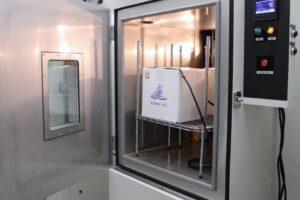
Specialty pharmacy distribution continues to expand into increasingly complex delivery models. Refrigerated injectables, GLP-1 medications, peptide therapies, compounded sterile preparations, frozen products, and other high-value medications are now moving across direct-to-patient channels, clinic replenishment programs, and multi-location pharmacy networks.
For these organizations, packaging selection cannot be reduced to choosing an insulated shipper that appears capable of staying cold for a certain number of hours.
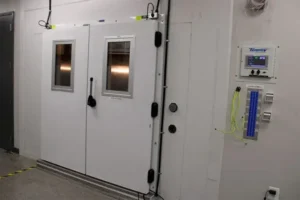
The more important question is whether the entire packaging configuration performs appropriately under conditions representative of the distribution environment.
That distinction is where cold chain testing and qualification become critical.
Nordic Cold Chain Solutions combines specialty pharmacy packaging expertise with Cold Chain Lab Services that can evaluate thermal systems, simulate environmental exposure, profile temperature behavior, and help organizations establish qualified packaging approaches before they are deployed at scale.
A Cold Chain Package Is a System
A thermal shipper does not perform independently.
Its behavior reflects the interaction of several components, including insulation, refrigerants, product mass, void space, coolant placement, package geometry, conditioning procedures, ambient exposure, and transit duration.
Changing one variable can influence the complete thermal profile.
For example, a pharmacy may switch to a smaller payload while continuing to use the same packaging configuration. The shipping carton may appear unchanged, but the reduced thermal mass can affect how quickly the payload responds to external conditions.
Similarly, adding more frozen gel packs does not automatically improve a refrigerated 2–8°C shipment. Depending on product placement and conditioning, excessive cold energy can create another problem by increasing the potential for low-temperature exposure.
This is why qualification should evaluate a defined pack-out rather than an individual packaging component in isolation.
Temperature Profiling Reveals What the Payload Experiences
Temperature profiling helps organizations understand how a package behaves throughout a thermal cycle.
Sensors can be positioned strategically to evaluate temperature behavior at relevant points within the payload area. The resulting data can show when the package reaches critical temperature thresholds, where thermal gradients occur, and how performance changes as external conditions shift.
For specialty pharmacies, this information can be used to answer practical operating questions.

How quickly does the payload approach the upper temperature limit during warm exposure? Does the refrigerant configuration create localized cold areas? How much usable duration does the package provide under the evaluated profile? Does product placement affect performance?
Those answers allow packaging decisions to be based on measured behavior instead of assumption.
Nordic Cold Chain Solutions Lab Services include temperature profiling to help organizations assess and optimize the conditions surrounding temperature-sensitive shipments.
Environmental Testing Brings the Distribution Lane Into the Lab
Real parcel networks rarely expose packages to one stable ambient temperature.
A specialty medication might leave an air-conditioned pharmacy, spend time on a loading dock, enter a carrier facility, move through line-haul transportation, transfer to another distribution center, travel inside a delivery vehicle, and eventually remain at a residence or clinic before retrieval.
Those transitions matter.
Cold Chain Lab Services can use environmental testing to simulate changing temperatures and other conditions associated with transportation. Testing a packaging configuration against realistic thermal profiles can provide a more meaningful indication of performance than evaluating it under a single constant ambient temperature.
This can be especially important when a pharmacy expands geographically.
A configuration used successfully for regional overnight delivery may require reevaluation before being deployed across longer two-day lanes or areas with substantially different seasonal conditions.
Testing provides a controlled way to investigate those scenarios before commercial shipments become the experiment.
Thermal Packaging Evaluation Helps Identify the Right Configuration
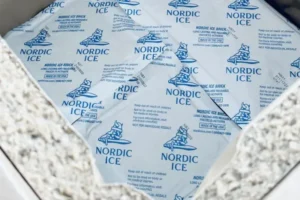
Specialty pharmacy teams often have several packaging materials available to them. A program may use insulated mailers for one therapy, rigid shippers for another, and different gel packs or refrigerants depending on duration.
Without a structured evaluation process, that variety can create unnecessary complexity.
Thermal packaging evaluation allows different configurations to be compared based on defined performance objectives.
An organization might compare insulation formats, refrigerant quantities, refrigerant geometry, payload positions, or package sizes. The objective is to find the configuration that meets the thermal requirement while remaining practical for fulfillment.
That last point matters.
A package that performs exceptionally well but requires a complicated 15-step assembly process may introduce operational risk when hundreds of technicians must repeat it. Likewise, an oversized package may pass qualification but increase freight costs and warehouse requirements far beyond what is necessary.
Cold chain engineering therefore needs to balance thermal protection with execution.
Qualification Converts Testing Into an Operational Standard
Testing generates information. Qualification turns that information into a defined packaging process.
Once an organization identifies a configuration that meets its requirements under an established protocol, the pack-out can be documented and implemented as a repeatable operating standard.
That documentation may specify the shipper, insulation, coolant quantity, refrigerant conditioning, product position, payload assumptions, closure method, staging limitations, and other controlled variables.
For specialty pharmacies operating within SOP-driven environments, this level of specificity is valuable.
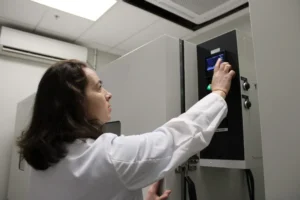
Instead of telling staff to “use two cold packs,” a qualified pack-out can define precisely which refrigerants are required, how they are conditioned, where they are placed, and which package configuration applies to the shipment.
This reduces interpretation at the packing station.
It also provides a stronger framework for training, auditing, troubleshooting, and expanding operations into additional facilities.
Testing Is Particularly Important for Emerging Therapies
Emerging therapy programs can evolve quickly.
A pharmacy may begin shipping semaglutide and later add tirzepatide, peptides, specialty injectables, or other compounded products. Payload dimensions and order composition change. Patient geography expands. Shipping volume increases.
The packaging program needs to evolve with it.
Nordic’s material-neutral approach allows packaging strategies to be selected around shipment requirements rather than forcing every application into one product family.
That could mean insulated mailers for compact refrigerated orders, gel packs or semi-rigid refrigerants matched to specific pack-outs, rigid insulated shippers for longer durations, or specialized configurations for frozen products.
Laboratory evaluation provides a technical basis for determining where each configuration belongs.
Seasonal Qualification Can Expose Hidden Weaknesses
One of the most common limitations of a single packaging configuration is assuming it will behave identically throughout the year.
Summer and winter introduce different thermal stresses.
During hot conditions, the challenge may be maintaining adequate cooling duration. During cold weather, frozen external conditions can increase the possibility of overcooling a refrigerated product if refrigerant and insulation strategies are not appropriately balanced.
For national specialty pharmacy programs, the same package may leave one climate and arrive in another.
Testing representative seasonal profiles can help organizations identify whether one configuration remains appropriate year-round or whether seasonal pack-outs should be introduced.
Rather than reacting to excursions after they occur, the organization can define those transitions in advance.
When Lab Data Becomes an Operational Tool
The greatest value of cold chain testing appears when the results influence everyday fulfillment.
Temperature profiling can inform refrigerant placement. Environmental testing can guide seasonal adjustments. Thermal evaluations can identify more efficient insulation systems. Qualification can produce clear pack-out instructions. Monitoring data from live shipments can then be used to confirm or refine assumptions.
That creates a feedback loop between laboratory performance and operational reality.
Nordic Cold Chain Solutions helps specialty pharmacies move through that process by combining packaging expertise with testing, qualification, consulting, and temperature-control products.
For pharmacies handling increasingly diverse temperature-sensitive medications, that integration helps turn cold chain packaging from an individual supply purchase into a controlled distribution program.
A successful qualification program should ultimately make fulfillment easier, not harder. Once the engineering work has been completed, technicians should have a clear packaging system that can be executed consistently without reengineering each shipment.